therapeutic support
Carys (she/they) is a Dance & Movement Psychotherapist, having trained at Goldsmith’s University, and registered with the Association of Dance & Movement Psychotherapy UK.
As a therapist, Carys has worked in a variety of settings, including charities, schools and the NHS. They currently lead the counselling and wellbeing services at sexual health & mental health charity Spectra, as well as working 1:1 with clients and running wellbeing workshops & creative therapy groups. She has also worked as a therapist supporting survivors of gendered violence, and as a Social Prescribing Wellbeing Coordinator, where she led combined LifeSkills & Dance Therapy groups in the community.
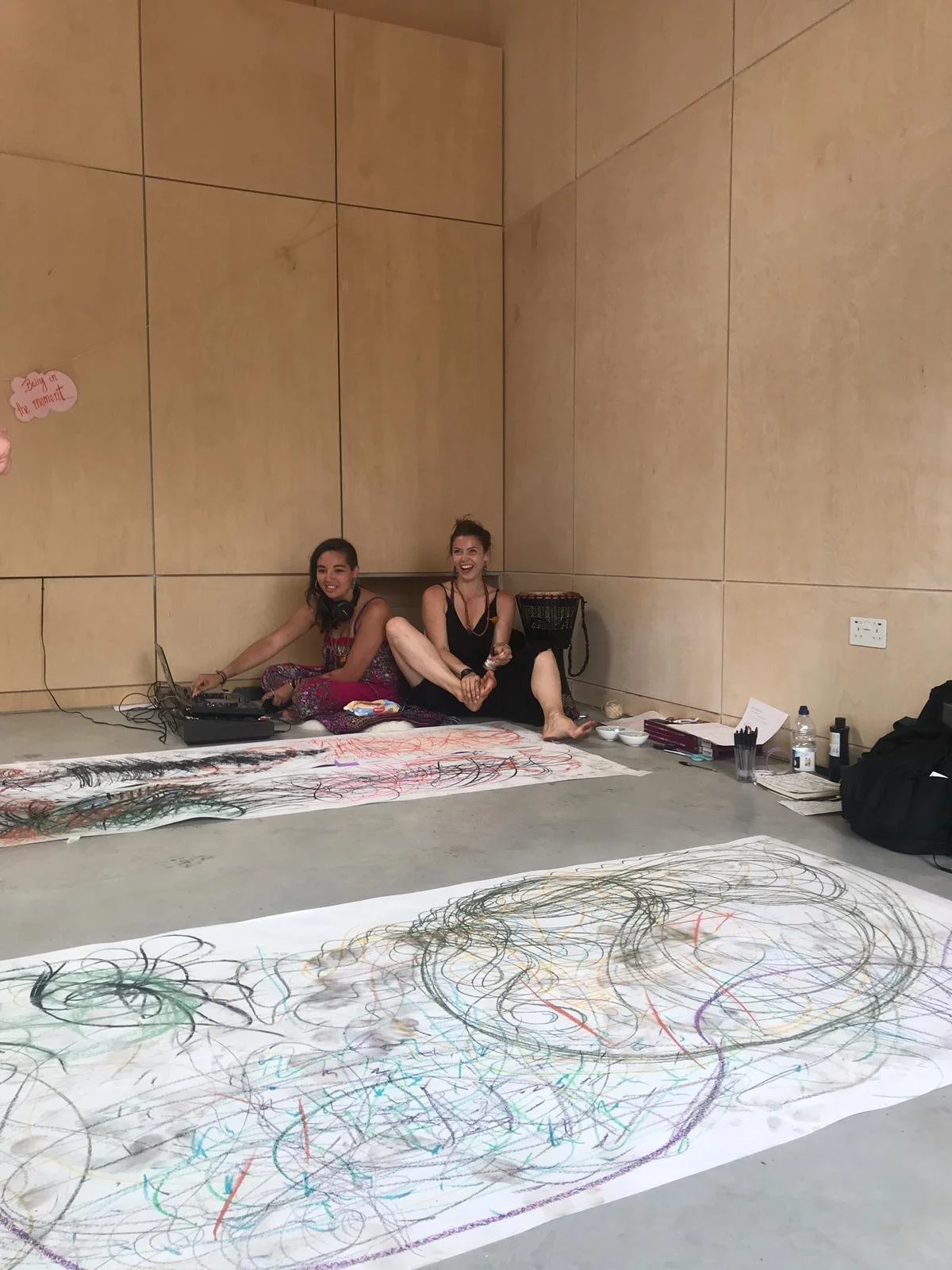
They are a facilitator for True You Today’s Workshops for Survivors series, where they lead Creative Movement sessions and 1:1 DJing workshops with survivors to empower them with the skills and thrills of music-making and movement to support healing, partnering with Pirate Studios to provide aspirational and exciting experiences for participants. She has also brought these workshops to work with young people at Islington Mind and Project Indigo.
As a queer, neurodivergent, mixed-race therapist, Carys is particularly passionate about bringing their embodied approach to marginalised groups, and those whose life experiences have been historically pathologised rather than understood as a part of the glorious spectrum of human experience. She adopts a queering approach to DMP that aims to move beyond binaries and norms, with an affirmative and inclusive approach that is sensitive to different lifestyles, spiritualities, relationship dynamics, sexualities and gender expressions. When working with the body, she believes it is essential to proactively challenge ideologies and power structures that have historically oppressed bodies and encouraged embodied shame: misogyny, racism, ableism, fatphobia, classism, queerphobia, whorephobia and so many other forms of oppression. Their current work as a therapist primarily supports the LGBTQIA+ community, sex workers, disabled & neurodivergent clients, people struggling with addiction, migrant communities, and people living with chronic illness.
What is dance therapy?
Dance & Movement Psychotherapy (DMP) is a psychotherapeutic practice - as with other types of psychodynamic therapies, unconscious processes and relational patterns are explored in sessions. Rather than using words as the primary form of communication, movement is used as a medium to enable non-verbal expression, and co-creation between therapist and client, helping to connect and integrate one’s mind-body experience. A combination of creative and verbal expression can support processing and transformation.
DMP has the benefit of being accessible to all: we can all move and express ourselves with our bodies, to different degrees. Non-verbal expression can be fully explored, which is essential for many. DMP doesn’t have to involve anything that resembles dance whatsoever: movement - which can be simply breathing or shrugging one’s shoulders - is simply one mode of expression. Sessions can use art materials, music, colourful props and toys, imagery, a range of musical instruments - all in service of what might help a client to express themselves and access their inner experience.
Whilst working with the body and developing somatic connection (rather than splitting mind/body) can be a transformative and healing experience, especially for people whose relationship to the body is challenging, it can also feel extremely vulnerable: the body can be both a site of liberation and oppression. Utilising trauma-informed approaches and working with the body’s possibilities and limitations is essential. Carys has delivered workplace training in the NHS on trauma-informed approaches, to support healthcare professionals in embedding some of these core principles in their practice.